

Почему стоит выбрать оборудование BEIER?
27 лет истории.
Продается в 150 стран.
Продается в 150 стран.
Линия по экструзии филамента для 3D-печати
В аддитивном производстве постоянный диаметр нити и округлость поперечного сечения напрямую определяют производительность 3D-печати и надежность потока через сопло. Производственная линия экструзии нити для 3D-печати должна исключать температурные колебания в зоне расплава, поддерживая при этом стабильное линейное натяжение во время охлаждения и намотки.
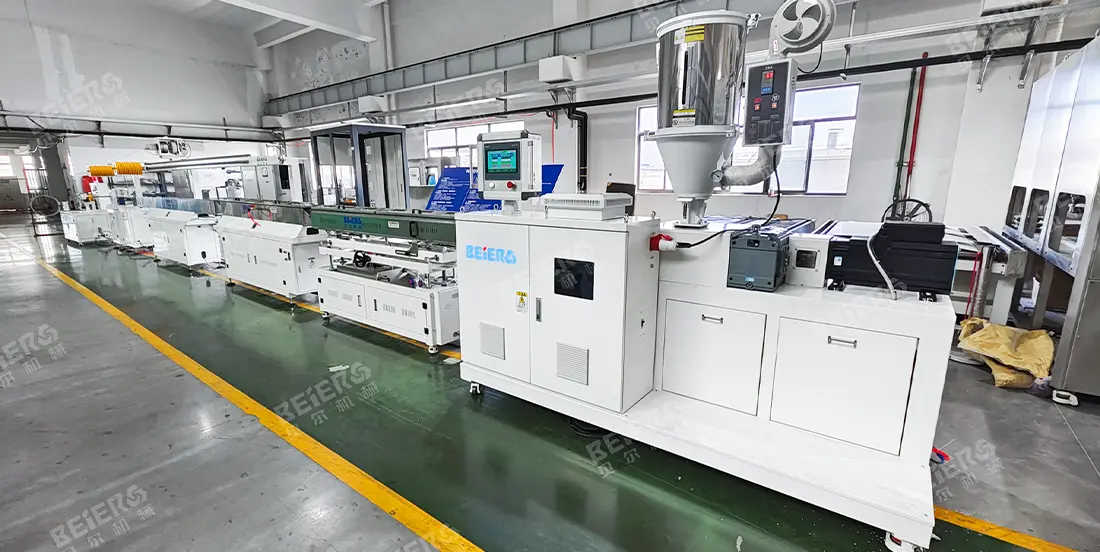
Разработанная специально для промышленной обработки полимеров, линия по производству филаментов для 3D-печати BEIER ставит во главу угла однородность расплава и точные физические размеры, а не просто скорость подачи. Независимо от того, производится ли стандартная катушка PLA диаметром 1,75 мм или высокотемпературные конструкционные пластики, такие как PEEK, наша высокопроизводительная экструзионная система обеспечивает замкнутый контур управления, необходимый для надежной и непрерывной работы.
Компоненты линии по производству филамента для 3D-печати:
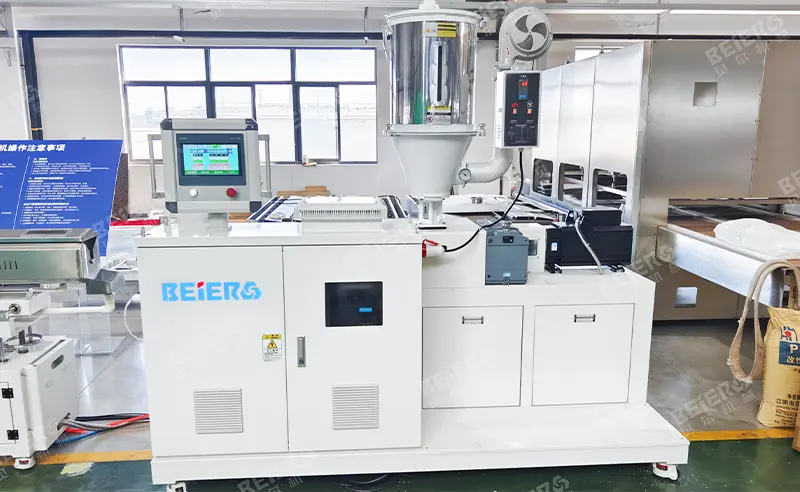
Высокоточный одношнековый экструдер
Оснащен специальным полимерным шнеком BEIER с соотношением L/D 28:1 или 30:1, оптимизированным для плавки с низким сдвиговым усилием. Многозонные ПИД-регуляторы температуры поддерживают стабильную температуру цилиндра в пределах ±1°C.
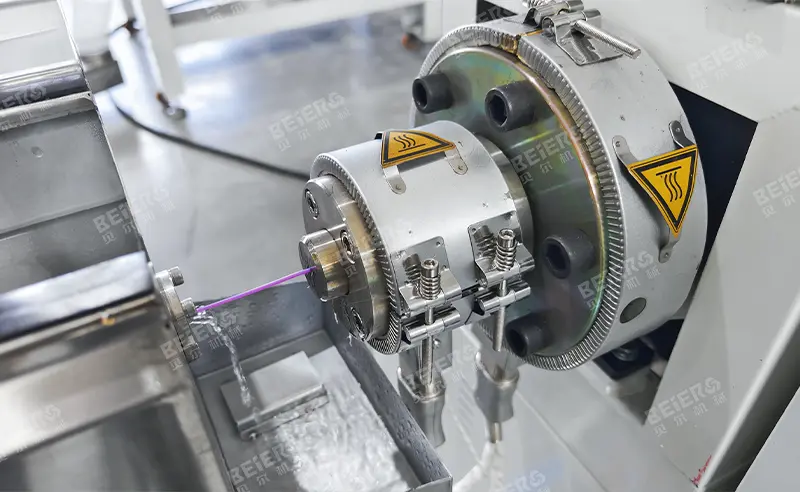
Высокоточная штамповочная головка
Специально разработанная геометрия каналов для потока предотвращает деградацию и застой смолы, обеспечивая равномерный поток расплава перед попаданием в систему охлаждения.
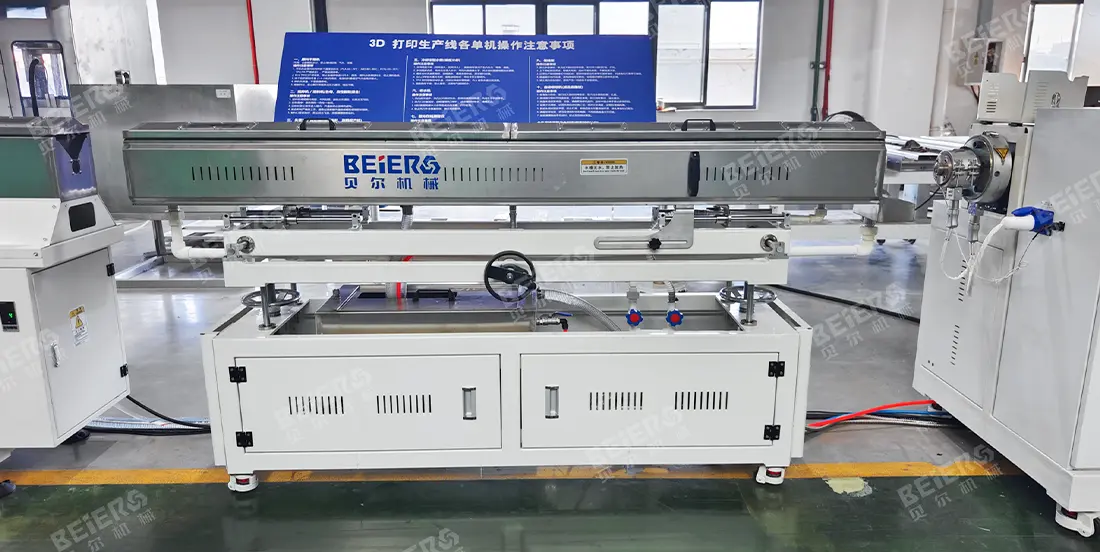
Многоступенчатый охлаждающий бак с регулировкой температуры
Обладает точной регулировкой температуры воды и возможностью вакуумной обработки для придания формы нити без термического шока или внутреннего напряжения.
Двухосевое лазерное измерение диаметра
Непрерывное онлайн-измерение параметров по осям X и Y. Обратная связь в режиме реального времени напрямую передается на устройство для динамической коррекции допусков.
Тяговое устройство с сервоприводом
Не оставляющие следов резиновые контактные ролики, приводимые в движение прецизионными сервомоторами, поддерживают постоянную скорость протяжки без деформации полужесткой нити.
Автоматический двухпозиционный натяжной механизм
Аккуратные механизмы перемещения обеспечивают равномерную намотку бобины без нахлеста, поддерживая постоянное натяжение от начала до конца.
Видео линии экструзии филамента для 3D-печати:
Совместимость материалов и универсальность обработки:
Разработанная компанией BEIER линия экструзии филамента для 3D-печати позволяет работать с широким спектром термопластичных материалов с различными показателями текучести расплава и тепловыми свойствами:
- Типичные полимеры (PLA, ABS, PETG, HIPS): обрабатываются с использованием оптимизированных режимов охлаждения для предотвращения деформации и усадки.
- Гибкие эластомеры (ТПУ, ТПЭ): обработка осуществляется с помощью направляющих с низким коэффициентом трения и точного контроля натяжения для предотвращения осевого растяжения во время отрыва.
- Инженерные и высокотемпературные смолы (нейлон/ПА, ПК, ПЭЭК): оснащены зонами высокотемпературного нагрева и специальными износостойкими цилиндрами из сплавов.
Система контроля качества с замкнутым циклом:
Изменение диаметра является основной причиной проскальзывания шестерен экструдера и засорения нагревательного элемента в 3D-принтерах. Линия экструзии филамента BEIER для 3D-печати использует интегрированную систему обратной связи ПЛК с замкнутым контуром. Если лазерный датчик обнаруживает отклонение размеров, превышающее заданные параметры, контроллер автоматически регулирует скорость вращения двигателя волочения в течение миллисекунд, постоянно поддерживая целевые размеры в пределах ±0,02 мм.
ЧАСТО ЗАДАВАЕМЫЕ ВОПРОСЫ:
В1: Какие допуски по диаметру может стабильно поддерживать производственная линия BEIER?
А: При нормальных условиях эксплуатации и использовании надлежащим образом высушенного сырья линия обеспечивает строгий допуск по диаметру ±0,02 мм как для нитей диаметром 1,75 мм, так и для нитей диаметром 2,85 мм.
В2: Какие виды смол-сырья совместимы с этой экструзионной линией?
A: Система обрабатывает стандартные термопласты, такие как PLA, ABS, PETG и HIPS, а также гибкий TPU. Высокотемпературные конфигурации позволяют обрабатывать PA (нейлон), PC и PEEK.
В3: Каким образом оборудование BEIER предотвращает овальность или деформацию нити?
А: Оваличность контролируется точной конструкцией каналов фильеры, регулируемой температурой расплава и многоступенчатым охлаждением в водяной ванне, которое равномерно рассеивает тепло до контакта с материалом при вытягивании.
Вопрос 4: Автоматизирована ли система лазерного измерения диаметра?
А: Да. Двухосевой лазерный измеритель диаметра обеспечивает обратную связь в реальном времени с центральным ПЛК, автоматически точно регулируя скорость протяжки нити для поддержания стабильной толщины филамента.

 Английский
 испанский
 персидский
 Русский
 WhatsApp: +86-13814880186
 Russian
  Russian
 English
  Spanish
  Persian